

Paragon
1979, Bristol Channel Cutter, 28’
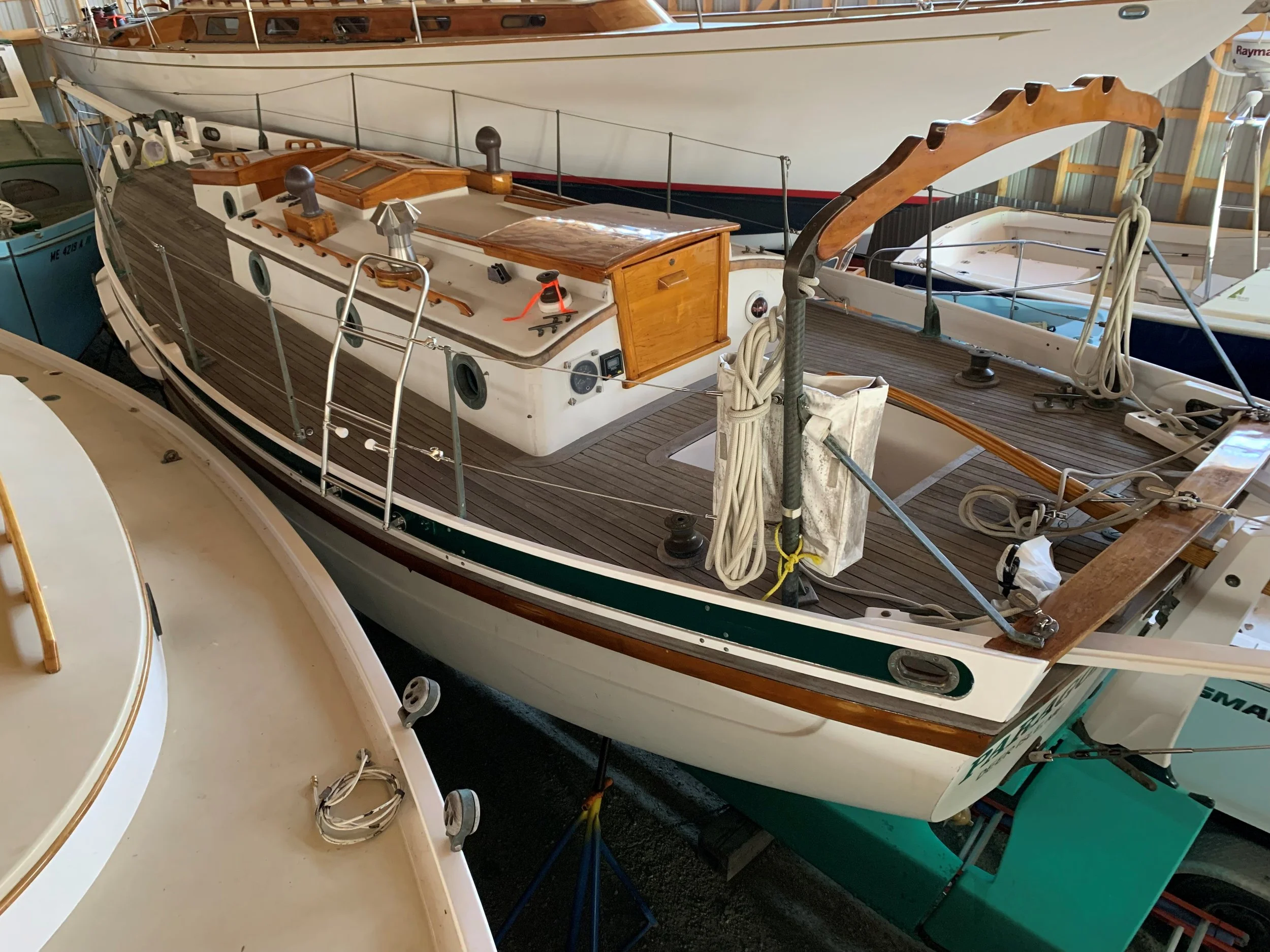
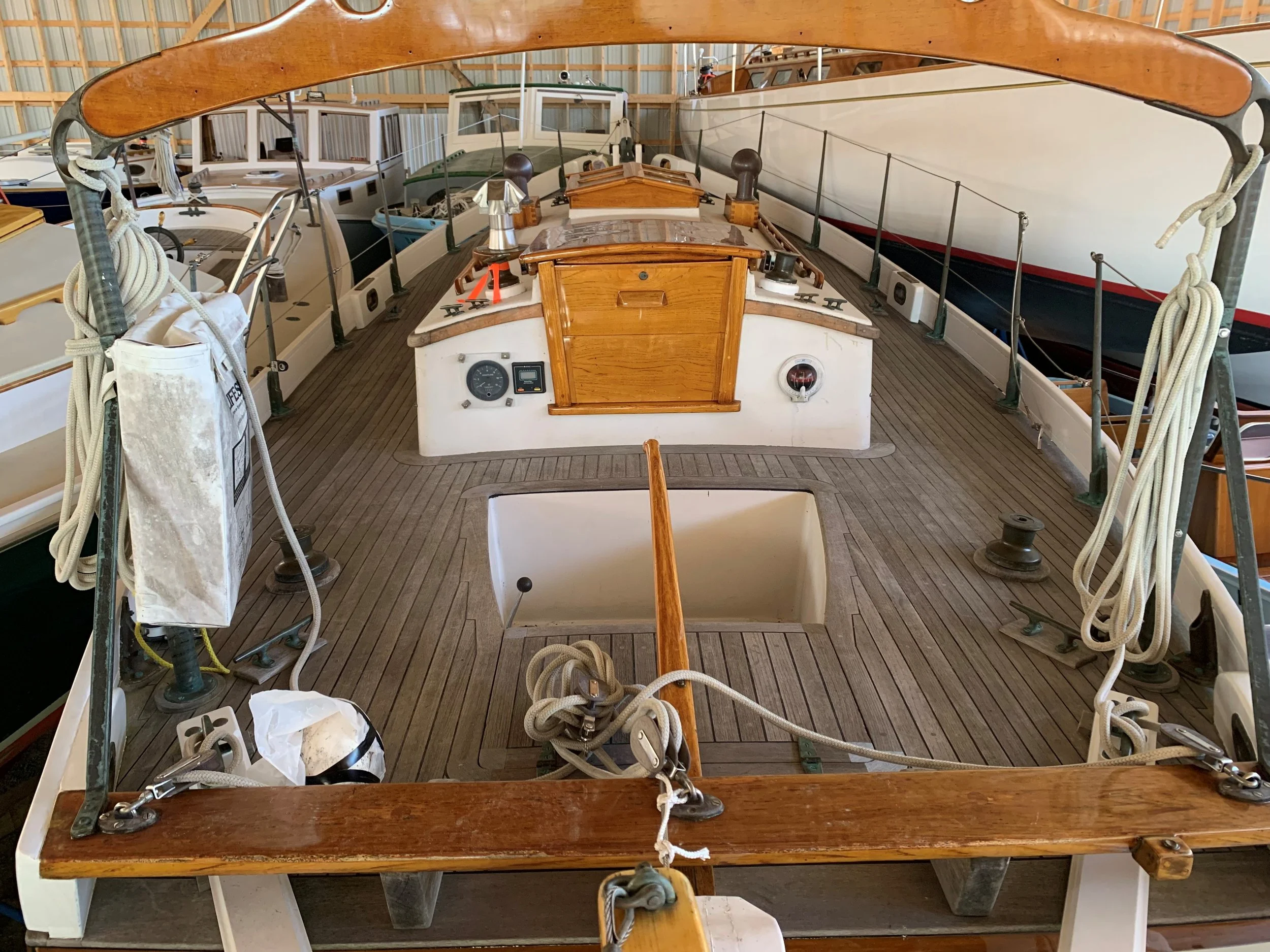
Paragon
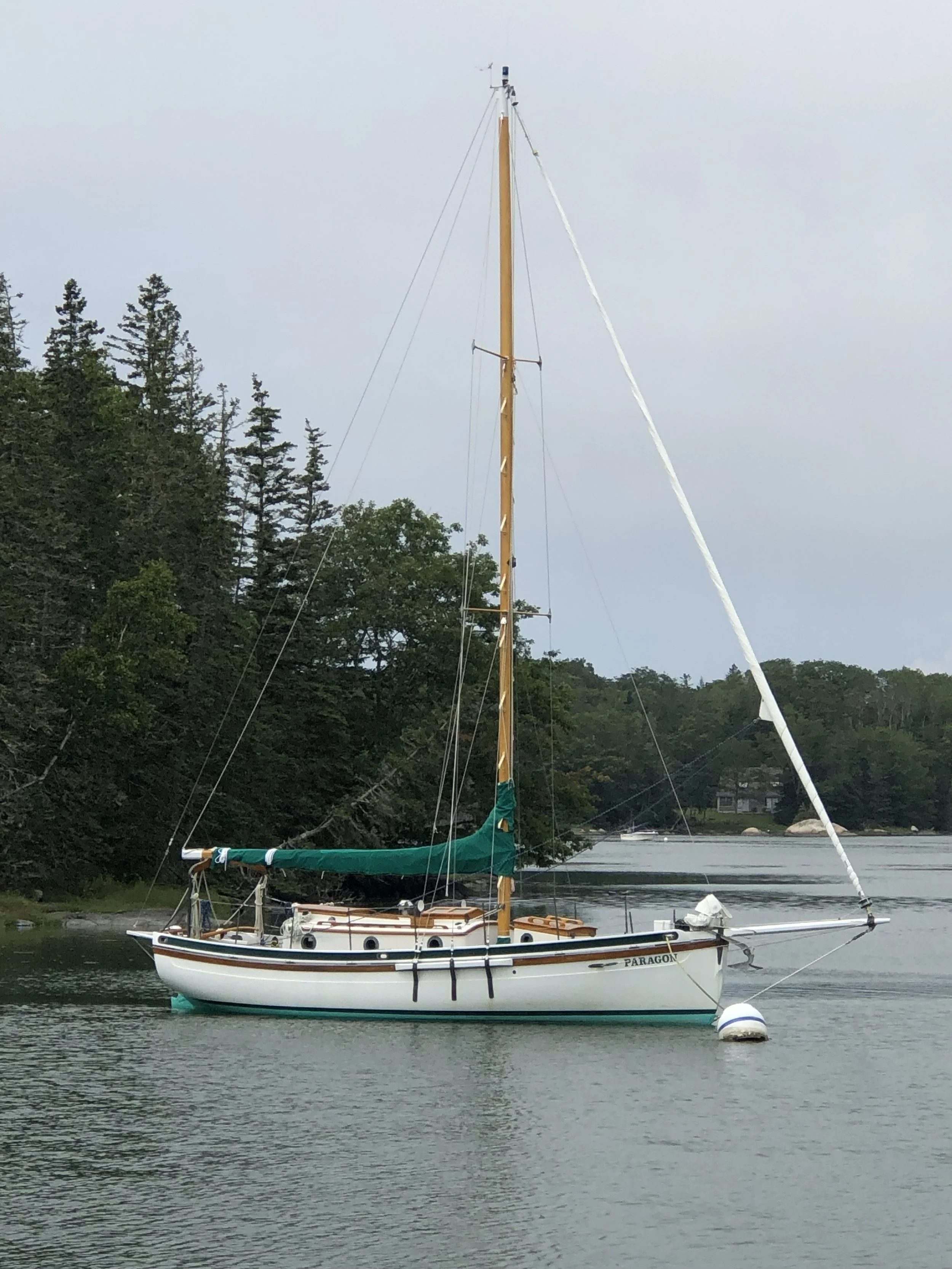
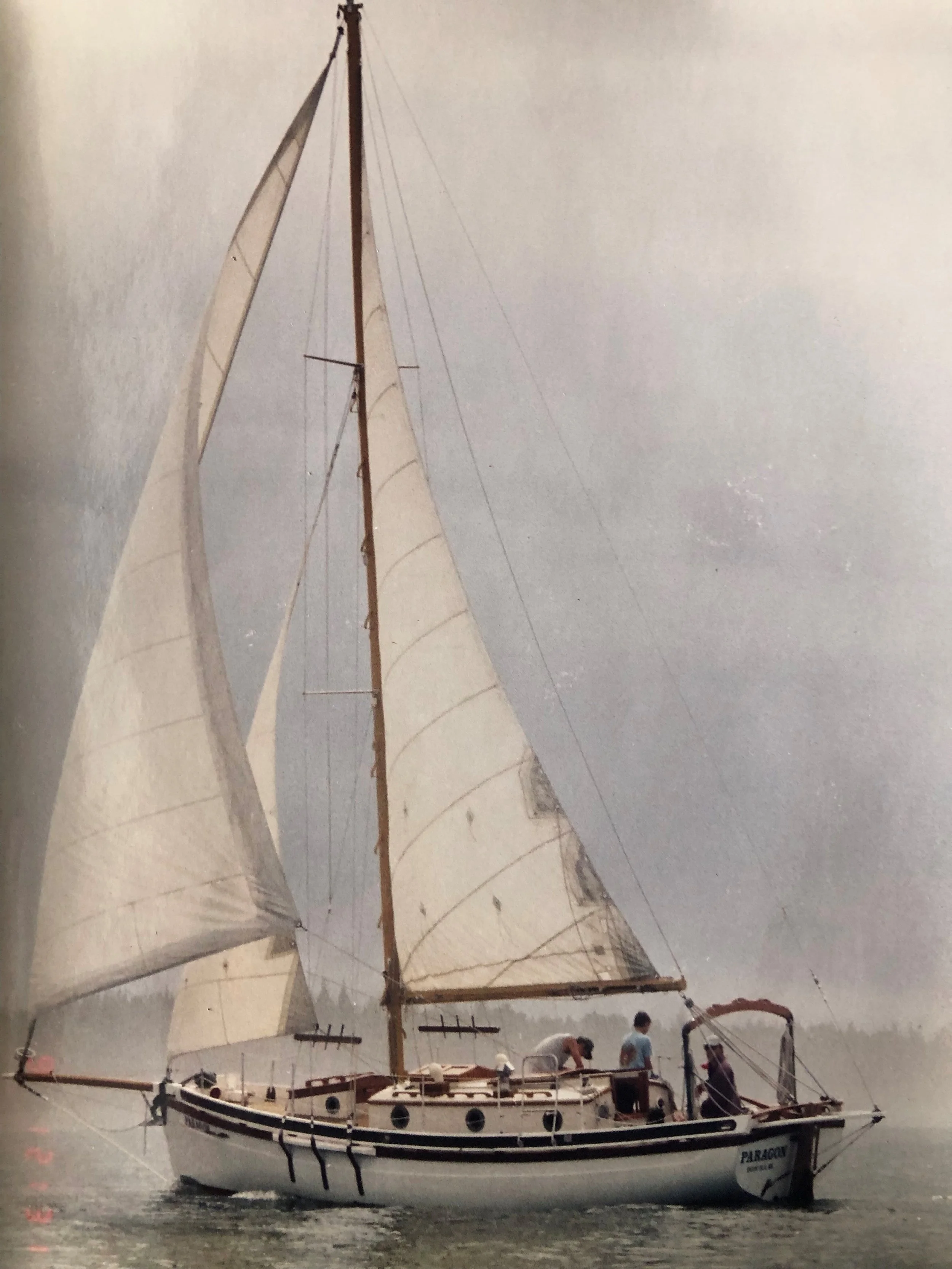
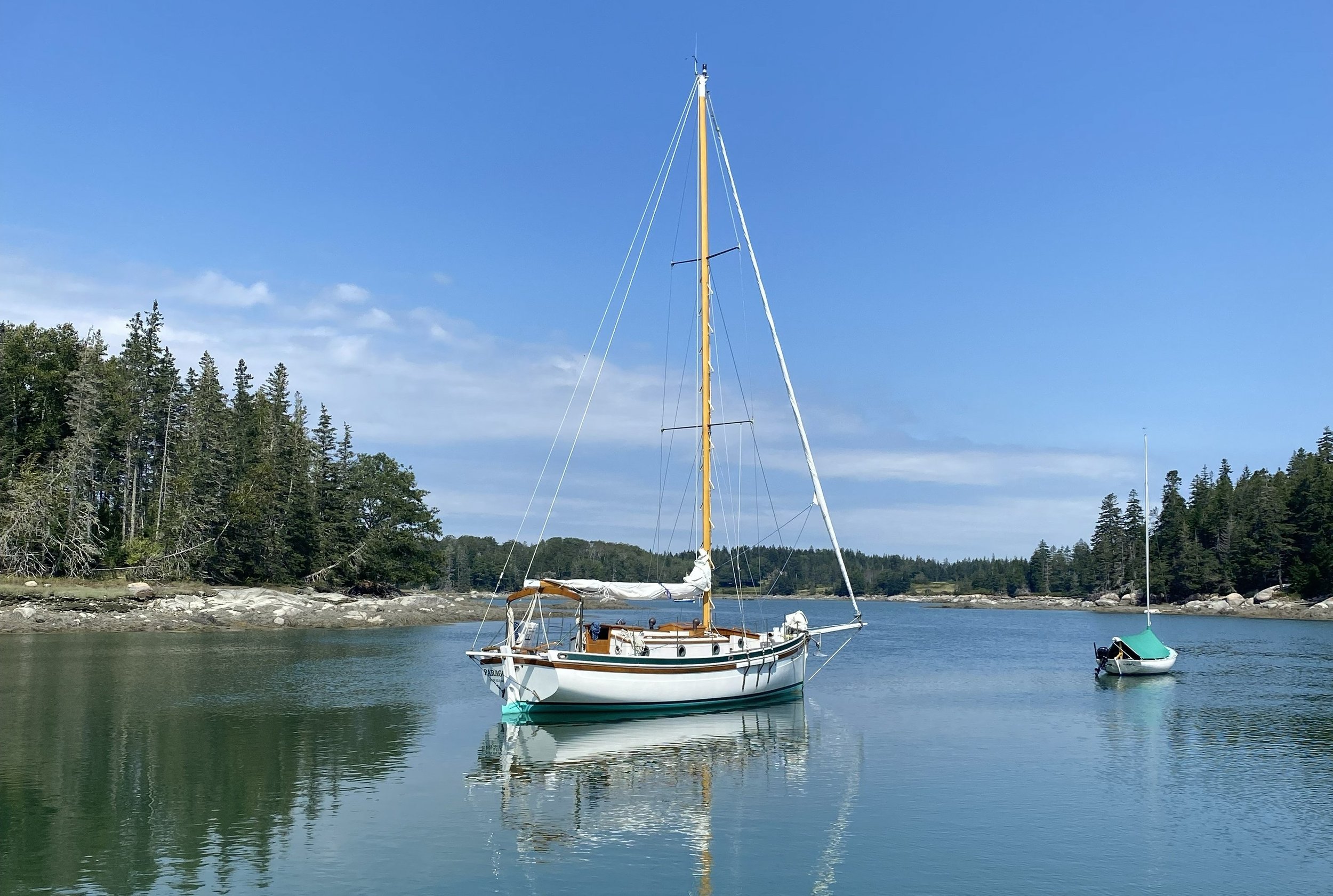
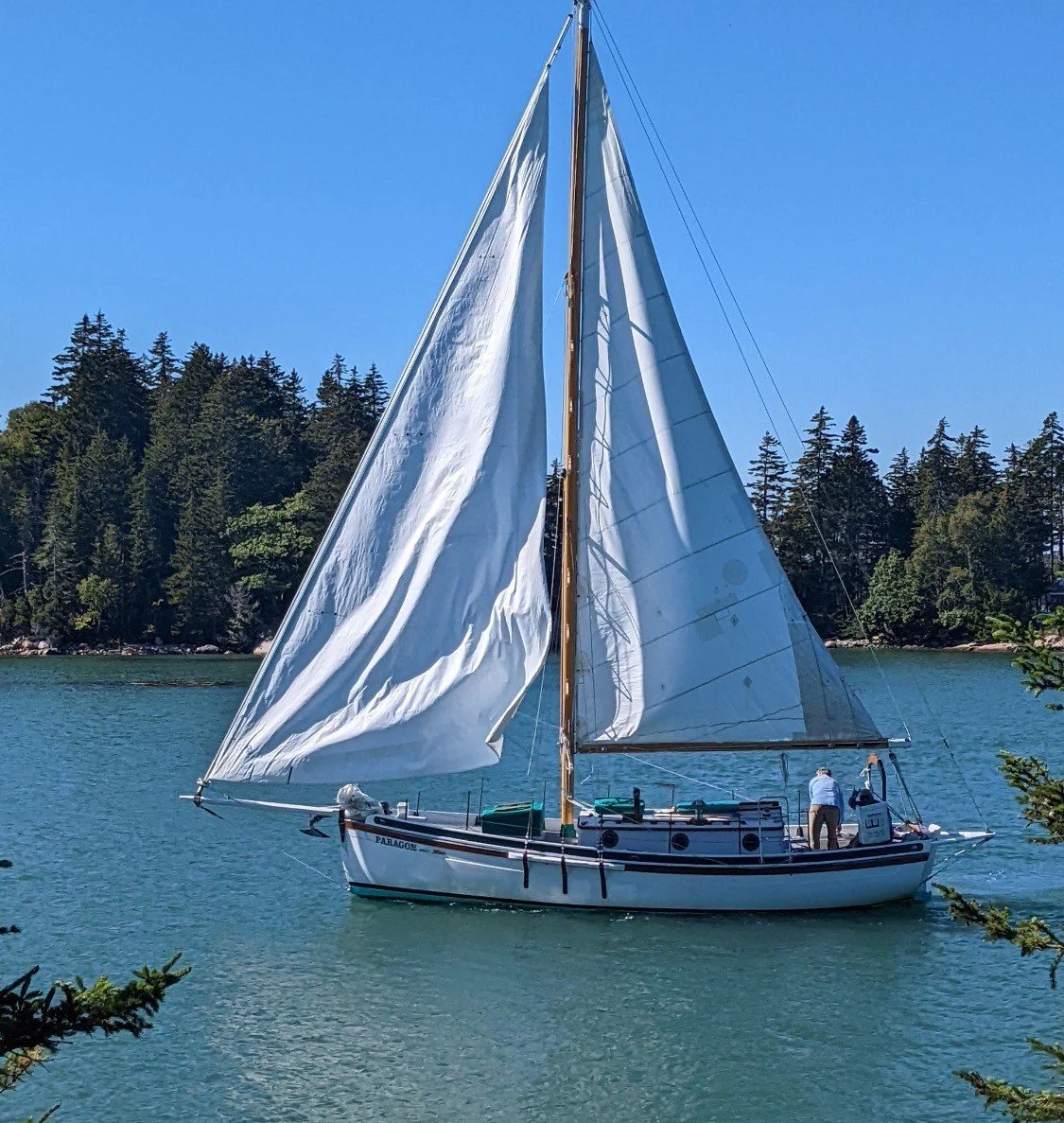
Few boats are built today that will withstand many years of punishment from blue water cruising. Lyle Hess designed boats just for that purpose. His designs have been proven by the many Bristol Channel Cutter owners who have ventured across the oceans. Everything about the Bristol Channel Cutter’s design exudes seaworthiness. Not only is she stouthearted but will surprise most with her sailing performance both in light and heavy airs.
Take careful note of her lines and how the water will flow undisturbed from her stem to the transom. The flat buttocks and flatness of the hull at the stem prevent her from squatting as she reaches hull speed.
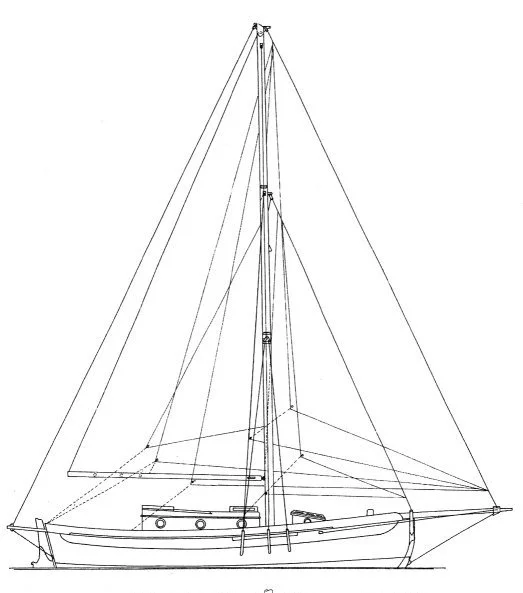
The generous sail area and long water line give her remarkable speeds in even light airs. Large headsails may be carried due to the long “J” measurement created by the bowsprit. Combined with the staysail, the effect is exceptional, providing excellent windward ability.
The accommodations are so intricately laid out that most owners find that even the smallest modifications have implications elsewhere below. Sea berths abound, and stowage is everywhere.
Asking Price: $60,000
Location: Brooklin, Maine
Interior Layout and Accommodations
The Bristol Channel Cutter and Falmouth Cutter feature an entirely hand fabricated interior. After the hull has been leveled and the ballast encapsulated the bulkheads are installed. Bulkheads are 3/4″ marine plywood bonded directly to the hull on both sides with 12″ of 1.5 oz mat, 24 oz roving, 1.5 oz mat, and 7.5 oz cloth. A 2″ hole is cut about every 18″ around the perimeter on the main bulkhead so bonding on both sides will fuse together through the holes. A 1″ foam barrier is installed between the bulkheads and the hull. This cushioning pad prevents hard point failure of the hull after years of yielding to the forces of the sea. The more bulkheads bonded to the hull and deck, the stronger the boat. There are 4 bulkheads bonded 360 degrees, and three additional quarter bulkheads bonded to the hull and deck amidships.
After the bulkheads have been installed, the furniture is fitted and bonded in a similar fashion as the bulkheads. All furniture is bonded on both sides using two layers of 8″ 1.5 oz mat and 7.5 oz cloth. The bonding of the furniture is clearly visible. Interior cabin sides are of vertically oriented Alaskan Yellow Cedar. Teak plywood is used on cabinet and bunk faces and finished with solid teak trim. Solid ash ceiling strips line the hull sides of all berths and workbench. The cabin sole is 1/2″ solid teak laid over 3/4″ marine ply. White fiberglass panels, grooved to resemble Tongue and Groove lumber are bonded to the bulkheads and overhead.
Interior layout from aft to forward. Interior spaces are entered by way of center-line companionway from cockpit (aft). Companionway steps are easily removed to allow for access to engine area by way of hinged door and lift-up countertop
To starboard is a well-sized quarter berth extending aft under the cockpit providing sleeping space for two (2) persons. Immediately forward of the quarter berth is a storage cabinet with a large (full-sized charts) navigation desk counter-top and storage space below the cabinet surface in lockers and drawers.
Opposite (to port) is the galley area with insulated ice box and dry goods storage located below the galley counter-top. Additional galley storage in outboard lockers and below the galley countertop in drawer and locker storage. There is a stainless-steel sink basin inset in the galley countertop, and this is provided with (cold only) fresh and salt water by way of manually operated hand and foot pumps. Further forward in the galley area is equipment for cooking and heating with both an Origo 1500 alcohol stove and a Pacific diesel-fired, gimbaled stove with oven.
Next forward (on centerline) is a drop-leaf table. To port and starboard of the table are full length settee berths with storage under berths and additional storage above and outboard of the settees in lockers and shelves.
Continuing forward one passes through the main bulkhead to a forward cabin area. To port in this cabin is a work bench with storage under in lockers and drawers. This work bench may (with the addition of cushions) be used as an additional (single) sleeping berth. To starboard in the forward cabin is first a hanging locker, followed by a marine toilet and additional bench space.
The below deck spaces aboard Paragon are nicely finished off with teak and holly cabin soles, joinery and bulkhead fronts. The hull interior, joinery fronts and overhead are finished white to provide contrast to the darker varnished teak furniture and also to help reflect natural and artificial light. The interior space is well lighted with three (3) port lights on either side of the cabin, an overhead butterfly hatch and well positioned overhead dome lights and working lights in galley and nav areas. Ventilation is also well provided for with opening ports, opening butterfly hatch and forward scuttle hatch.
Hull, Deck, Cabin and Cockpit Construction
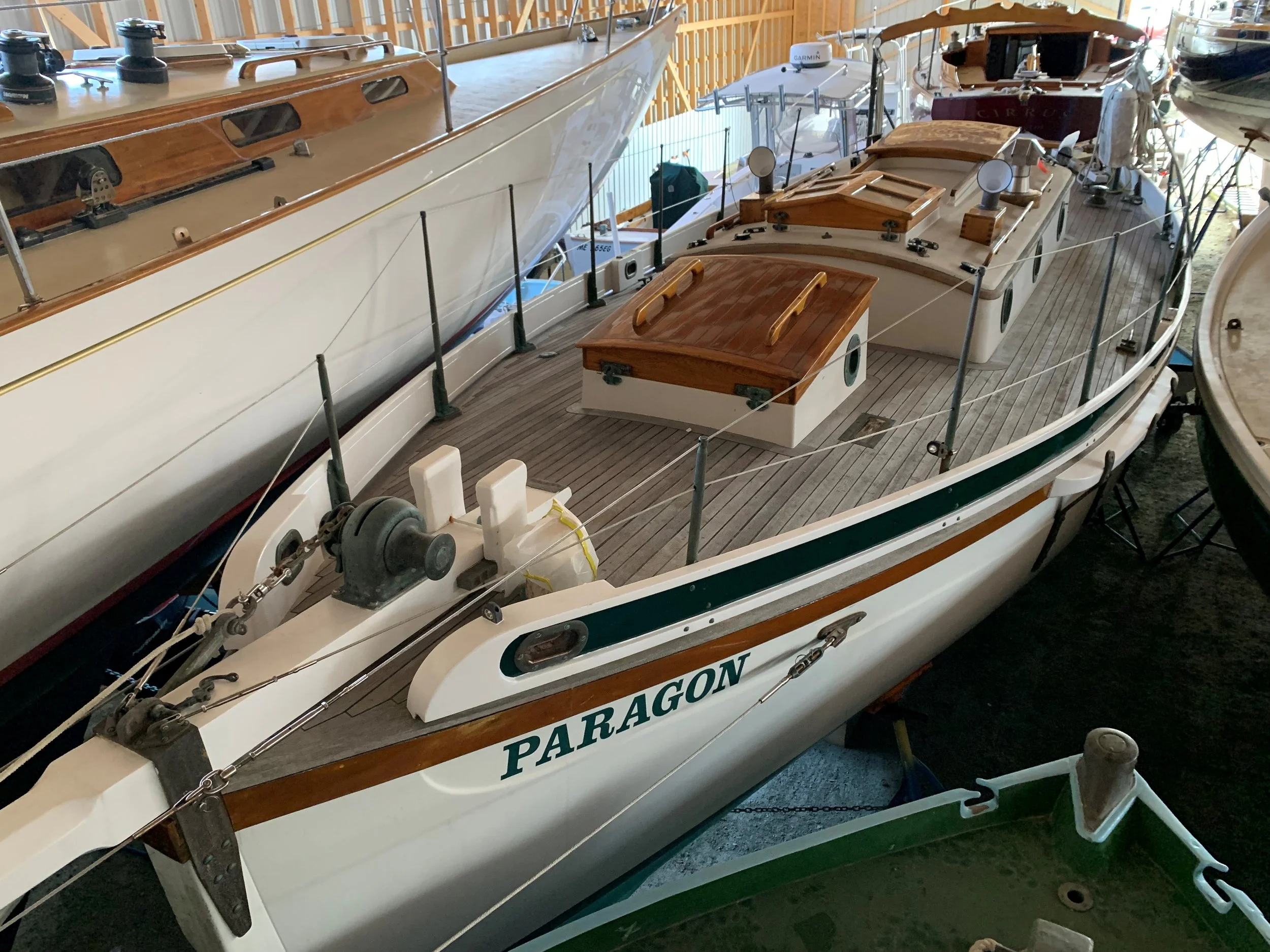
Full keel with keel hung rudder underwater configuration. Bottom coating is green anti-fouling paint; Topsides are white gelcoat with contrasting dark green single boot stripe. Varnished teak sheer planks and taffrail with white painted rub rails port and starboard. Topsides continue upwards to bulwarks with painted (white and green finish. Main decks are overlaid with teak and cabin top surface is molded non-skid gelcoat.
The two-part female mold first gets a white or light ivory gel coat above the boot stripe. A contrasting color (in this case dark green) is applied to the sheer stripe and boot stripe during this initial gel coating. After the color gel coating is complete, a black gel coat is applied. Then structural lay-up begins with a skin coat of 1.5 oz mat and 7.5 oz cloth. This is followed by three layers of 1.5 oz mat and 24 oz roving over the entire hull. An additional layer of 1.5 oz mat and 24 oz roving is applied below the water line and repeated again at the transom, forward at the bow and at the chainplate location. Finally, the entire hull has another layer of 1.5 oz mat and 7.5 oz cloth added. All materials are hand laid and hand squeegeed to ensure a solid lay-up without air bubbles. The result is a hull that is about 3/8″ at the sheer, 1/2″ at the water line, increasing to over 1″ thick near the bottom of the hull. The actual thickness at the bottom of the keel is greater than 1″ because of overlapping layers at this location. The hull will weigh approximately 2,600 lbs. when finished.
The solid, pre-cast 4,600lb lead ballast is set inside the hull cavity. After the hull is leveled and a dam installed, resin is poured into this cavity to completely encapsulate the ballast. Three layers of 1.5 oz mat and 24 oz roving are applied over the encapsulated ballast to ensure a lifetime of trouble-free use. The mast step is set on top of this solid mass.
The deck gets similar treatment. The deck mold is gel coated with the same white or light ivory as the hull. The non-skid is a slightly darker camel color. This is followed by black gel coat and a layer of 1.5 oz mat, 7.5 oz cloth, 1.5 oz mat, 24 oz roving, 1.5 oz mat and scored 1/2″ marine plywood core for stiffening. Extra layers of plywood are used where the mast and bits penetrate the deck. The Plywood core permits hardware to be mounted anywhere without reinforcing. The plywood core is encapsulated with additional lay-ups of 1.5 oz mat and 24 oz roving. Lazarette locker coamings are molded into the deck, providing excellent drainage.
After the interior is roughed in and everything is bonded to the hull, the deck is set in place. The hull has a 3.5″ in-turning flange to support the deck. After the deck is in register to the hull, it is drilled around its circumference every 5″, alternating each hole so they are not in line. The deck is raised and cleaned before 3M 5200 marine sealant is applied. After the deck is set into the sealant, 1/4″ stainless steel bolts are place through the holes and the deck is bonded to the hull flange using washers and lock nuts. After the hull to deck join is complete, the cover board is applied over this joint. This piece is screwed through the deck into the hull flange every 5″ alternating with the bolts. This deck joint is further strengthened when the bulwark stanchions are thru-bolted every 20″ using 1/2″ stainless steel bolts. After the joint is complete, the bulkheads and furniture are bonded to the deck in the same manner used in bonding to the hull.
NOTE: New teak decks 2016
Deck, Cockpit and Cabin top Hardware and Features
White painted Sitka Spruce bow sprit with bronze hardware, stainless steel wire rigging and bronze turnbuckle adjusters
White painted Sitka Spruce boomkin with bronze hardware, stainless steel wire rigging and bronze turnbuckle adjusters
Upper and lower stainless steel wire life lines port and starboard
Life line opening gates port and starboard
Manganese Bronze life line stanchions port and starboard
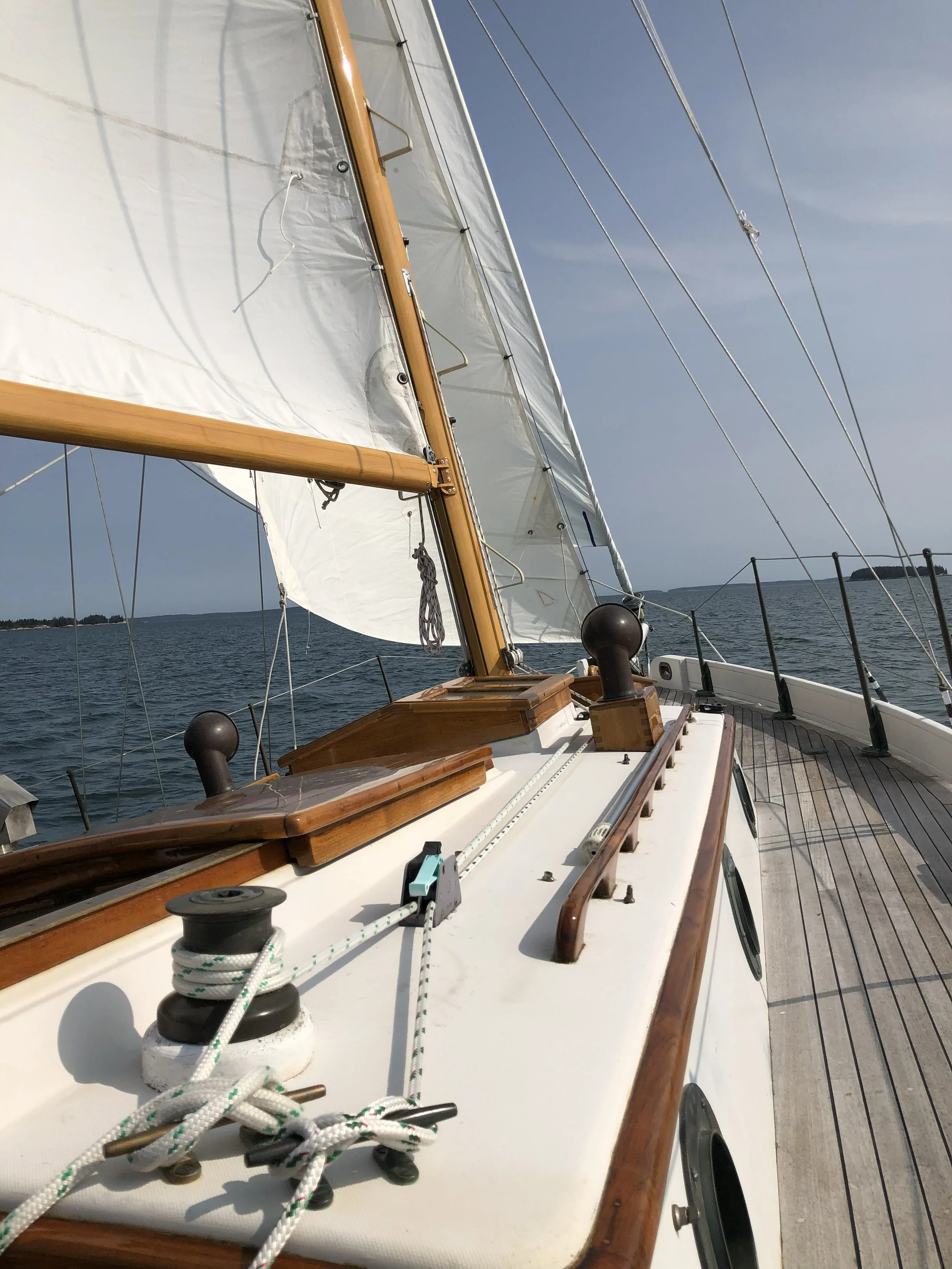
Bronze manually-operated windlass mounted on bow sprit
White painted Sitka Spruce samson posts at inboard end of bow sprit
Bronze bow line hawse pipes port and starboard at bow
Anchor locker dorade vent to port of bow sprit
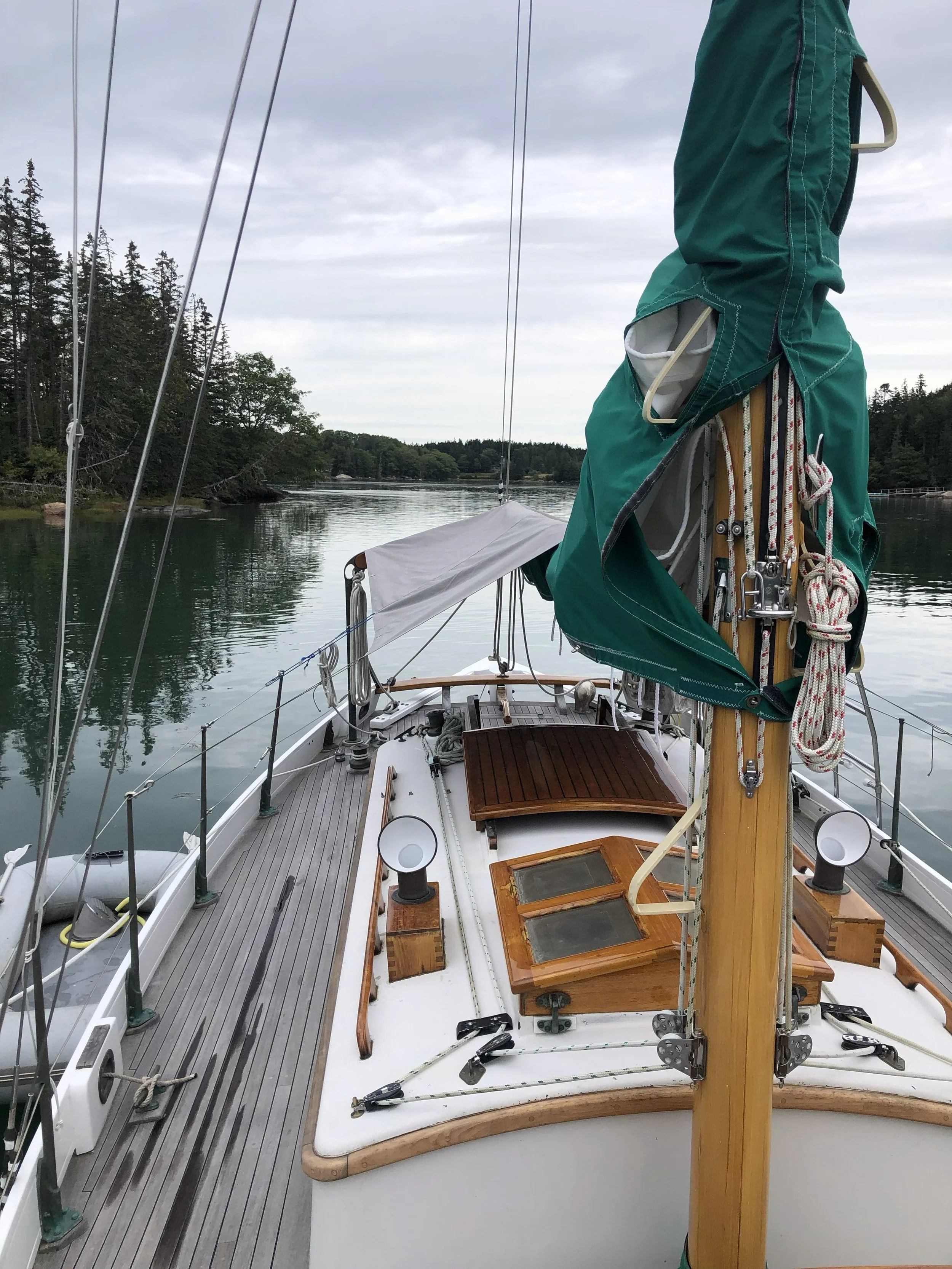
FRP scuttle hatch to forward cabin on foredeck with hinged varnished teak hatch lid and drop boards.
Varnished teak handrails port and starboard on scuttle hatch lid
Circular bronze opening ports on scuttle hatch sides port and starboard
Bronze pad eyes port and starboard at aft end of scuttle hatch
Deck prism with bronze plate in deck to port of scuttle hatch
Bronze deck fitting (Waste pump-out) outboard to starboard on foredeck
Bronze mast partner between forward end of main cabin and aft end of scuttle hatch
Exterior mounted bronze shroud chainplates port and starboard topsides outboard of mast partner
Bronze cleats and thru-bulwark hawse pipes at mid-rail port and starboard
Self-bailing FRP cockpit aft of main cabin
Storage lazarette under deck aft of cockpit
Bronze deck fitting (Fuel fill) aft of storage lazarette
Barlow #23-26 bronze sheet winches port and starboard outboard of cockpit
Bronze pad eyes for sheet leads (snatch blocks) port and starboard and outboard of sheet winches
Bronze sheet cleats port and starboard and aft of sheet winches
Bronze deck fitting (Water fill) outboard of port sheet winch
Bronze stern line docking cleats mounted port and starboard at forward ends of boomkin
Bronze thru-bulwark hawse pipes port and starboard at aft quarters
Bronze and varnished teak boom gallows
Bronze pad eyes for mainsheet blocks mounted on taff rail
Dorade vent for aft lazarette
Molded FRP main cabin with white gelcoat sides, back and front, bare teak cabin eyebrow with molded non-skid cabin top
Bronze circular opening ports in cabin sides port and starboard (3ea / side)
Varnished teak and glass opening butterfly hatch at forward end of cabin top
Companionway hatch with varnished teak sliding hatch, drop boards and frame at aft end of main cabin
Varnished teak handrails port and starboard on cabin top
Varnished teal dorade boxes with bronze dorade cowls port and starboard outboard of butterfly hatch
Varnished teak base and stainless steel “Charlie Noble” chimney for galley stove port side cabin top
Bronze pad eyes with Harken blocks for sheet and halyard leads at forward end of cabin top
Harken organizers for sheets and halyard leads port and starboard on cabin top
Rope clutches port and starboard on cabin top
Bronze Barlow #16 halyard and sheet winches port and starboard of companionway hatch
Bronze halyard and sheet cleats port and starboard aft on cabin top (2ea / side)
Spars and Rigging
Double-spreader, masthead-rigged cutter sail rig configuration
Keel-stepped aluminum mast and boom
Spar-Tite mast collar
Mast, boom and spreaders (painted AwlGrip) in faux-wood appearance with solid white coatings at mast head and aft end of boom.
Welded aluminum mast steps (painted AwlGrip) from deck level to upper staysail stay fitting
Mast-mounted spinnaker pole track with adjustable car.
Stainless steel standing rigging (shrouds and stays) with bronze turnbuckle adjusters
Stainless steel wire with rope tackle running back stays.
NOTE: Spars (painted AwlGrip) 2017
Sail Trim and Sail Handling Equipment
Main halyard
Boom topping lift
Spinnaker halyard
Jib halyard
Staysail halyard
Pro-Furl roller furling headstay
Furling line lead aft to cockpit
Jiffy Reefing
Bronze Barlow #14 reefing winch on boom
Bronze Barlow #16 halyard winches (2ea)
Bronze Barlow #23-26 sheet winches (2ea)
Masthead Windex
Sails and Canvas
Mainsail / Sperry Sails (2024)
Spare Mainsail
Roller-furling genoa (2016
Hanked on staysail (Fogh Sails)
Mainsail cover (1ea)
Staysail cover (1ea)
Hatch covers (3ea)
Tiller cover (1ea)
Sail bags (4ea)
NOTE: Mainsail new in 2024
NOTE: Genoa new in 2016
Electronics and Navigational Equipment
Plastimo Contest bulkhead-mounted helm compass
Raymarine GPS chart plotter
Signet knot meter
Signet Smart Pak depth sounder
Space Age Electronics depth sounder
SMR Sea Lab 7800 VHF radio
Autohelm 2000 tiller autopilot
Sony AM-FM / CD stereo and speakers
Schatz ships clock
Schatz barometer
Auxiliary Propulsion and Fuel Systems
Sabb (Norwegian) / Model G / single cylinder /10HP / Freshwater-cooled / inboard diesel
Sabb ignition panel with gauges for voltage and engine temperature
Double-lever controls for throttle and transmission control in cockpit
Reduction Gear: Sabb variable pitch
Stainless steel propellor shaft
Sabb bronze 2-blade variable pitch propellor
Raw water / fresh water / wet exhaust type engine cooling
Groco raw water filter
Bronze deck fitting (Fuel)
32 Gallon aluminum fuel tank with glass sight gauge
Parker / Racor primary fuel filter
Bronze seacocks for all propulsion related thru hull fittings
Electrical Equipment and Systems
12-Volt Dc ships electrical system
Two (2ea) heavy duty 12-Volt batteries
Separate battery banks for ship’s systems and engine ignition
Guest rotary style main battery selector switch
Two (2) circuit panels for operation of ships systems
Heart Interface Link 10 battery monitor
Battery charging by engine alternator
Freshwater Plumbing and Sanitation Systems
Bronze deck fitting (Water)
42 Gallon aluminum water tank
Stainless steel sink basin in galley area
Bronze Finspray faucet with manually operated hand pump
Bronze faucet with manually operated foot pump
Manually operated saltwater faucet
Bronze deck fitting (Waste)
Lavac marine toilet
Waste system plumbed for overboard discharge and / or discharge to holding tank.
14.5 Gallon waste tank
Bronze seacocks for all plumbing and sanitation thru hull fittings
NOTE: All waste systems hoses, valves and holding tank new in 2024 and never used
Steering Equipment and Systems
Keel / transom hung rudder with bronze pintals and gudgeons
Laminated varnished Ash tiller
Autohelm 2000 tiller autopilot
NOTE: Rudder new in 2023
Ground Tackle Equipment and Systems
Bronze anchor roller at bow sprit to starboard
35 lb. CQR anchor with all chain rode
Bronze manually operated windlass
Dewatering Equipment
Rule electric / automatic bilge pumps with float switches (2ea)
Safety and Required Equipment
Masthead tri-color / anchor light
Combination steaming and deck light
PFD’s / Type II (5ea)
PFD’s / Type IV (1ea)
Fire extinguishers (2ea)
Xintex carbon monoxide detector
Lifesling
Oil Placard
Additional Equipment
Boat hooks (2ea)
Fenders (3ea) and dock lines
Dock lines
Bucket
Stainless steel boarding / swim ladder
Plywood pram / tender with oars and oar locks